
Gleaning coordinator combines caring nature with passion for farming
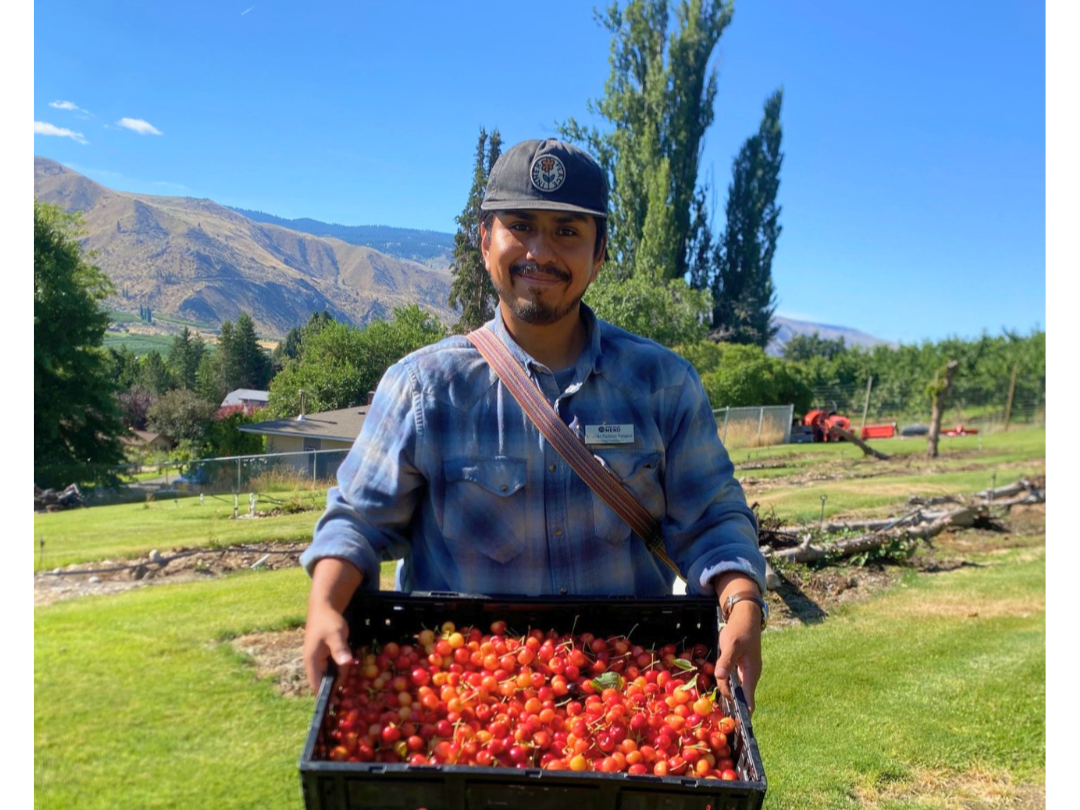
MEND Gleaning Coordinator Orlando Pacheco Vazquez gleaning cherries at Roundy Orchard.
MEND Gleaning Coordinator Orlando Pacheco Vazquez is a farmer at heart. This year he started a micro farm with his dad—a one-acre plot of land with at least a dozen crops on it, including multiple varieties of tomatoes, peppers, broccoli and kale, plus corn, beans and squash. As they’re figuring out how to best make it work, Orlando plans to give away this year’s harvest to friends, family and the Community Cupboard food pantry.
“I definitely don’t want anything to go to waste,” he says. “I’m really giving and I really just want to give produce out to people.”
Although he’s talking about his own farm, this sentiment makes it clear why he’s such a good fit for the gleaning coordinator position.
“I work with farmers and orchardists and backyard gardeners, and I pick the excess produce they have,” he tells people when they ask him about his job.
That excess produce goes to the Cupboard, giving shoppers fresh local fruits and vegetables they might not otherwise have access to.
“Produce is just a huge part of our valley and not a lot of people can afford it,” said Orlando. “Having local produce that’s free gives them a chance to live a happy, healthy life as well. It lets them enjoy those little things, like having a fresh peach or apricot.”
Not only does it help Cupboard shoppers, the gleaning program also reduces waste. Many local farms and orchards call Orlando when they can’t harvest their crops for any number of reasons. Warehouses often stop accepting fruit after they reach a certain amount to avoid flooding the market and reducing how much the fruit is worth. Some fruit may have been damaged by sun or hail.
Gleaning for good
This year, one orchard worker told Orlando the cherries are smaller than normal, which can reduce their value to the point that some orchardists won’t pick them—the cost to harvest the fruit may be more than the crop is worth.
“There’s a chance of them losing a lot of money because of that,” Orlando says.
After Orlando determines the particulars of the glean—what crops need to be harvested, how quickly it needs to happen before they start to go bad, and how much produce there will be—he schedules a date and organizes a group of volunteers. Generally, gleaning shifts are about two hours, in the morning before it gets hot. If there’s more produce than a group of volunteers can harvest in that time period, he may schedule out multiple days at the same location.
There are many things Orlando enjoys about farming, including the science of how to make the soil as healthy as possible, figuring out the best way to mitigate pests, and watching things grow.
“I enjoy working with my hands, and thinking a lot,” he said. “You need both in farming.”
Orlando’s desire to farm consistently has been a challenge. One farm where he worked shut down due to an issue with their land lease; Orlando had to quit his next farming job after he injured his knee and couldn’t work. But his passion for farming continues to drive him. After he finishes a day of gleaning for MEND, he often heads to the plot in Cashmere he farms with his dad. Ultimately, he hopes to have a farm of his own. As he visits more farms for the gleaning program, he’s gathering ideas of elements he may want to incorporate into his own property someday. So far, the list includes fruit trees, vegetables, farm animals and native plants.
In the meantime, Orlando is enjoying his job.
“Coming into it with my background and being a pretty caring person makes it a good fit,” says Orlando. “I’m a Christian and I definitely think it’s just in my beliefs to give back as much as I can.”